
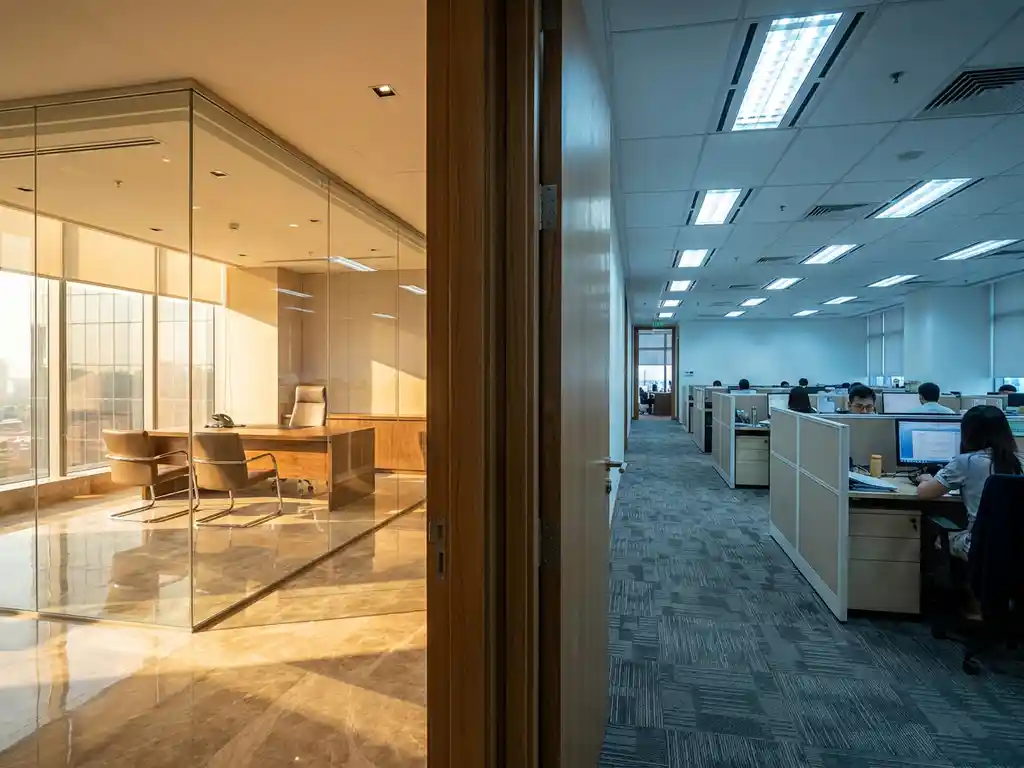
When searching for the perfect office space, understanding the classification system is crucial for making an informed decision. Office buildings are typically categorized into different classes, with Class A and Class B being the most common designations you’ll encounter in the commercial real estate market. These classifications help tenants and investors quickly assess the quality, amenities, and rental expectations of different properties.
The distinction between Class A and Class B office spaces goes beyond simple labeling—it affects everything from your monthly rent to your company’s image and employee satisfaction. Whether you’re a growing startup or an established business looking to relocate, knowing these differences will help you choose the office space that best aligns with your budget, needs, and long-term goals.
What is the difference between Class A and Class B office space?
Class A office spaces are premium buildings with top-tier amenities, modern infrastructure, and prime locations, while Class B office spaces are well-maintained properties with good functionality but fewer luxury features and typically lower rental costs. The classification system helps standardize how commercial real estate professionals evaluate and market office properties.
The primary differences extend across several key areas. Class A buildings typically feature state-of-the-art technology infrastructure, high-end finishes, professional property management, and prestigious addresses. They attract established corporations and businesses that prioritize image and employee experience. Class B properties, while still professional and functional, may have older building systems, standard finishes, and fewer amenities, making them attractive to cost-conscious businesses that still need quality office space.
Location plays a significant role in these classifications. Class A buildings are usually found in central business districts or highly desirable suburban markets with excellent transportation access. Class B buildings might be located in secondary markets or slightly removed from prime areas, though they still maintain good accessibility and professional environments.
What makes an office building qualify as Class A?
Class A office buildings must meet strict criteria, including premium construction quality, modern building systems, professional management, prime locations, and high-end amenities that command top market rents. These properties represent the highest quality office space available in their respective markets.
Several specific features typically define Class A properties:
- Modern infrastructure: Advanced HVAC systems, high-speed elevators, fiber optic cabling, and energy-efficient lighting
- Premium finishes: Marble or granite lobbies, high-quality flooring, floor-to-ceiling windows, and sophisticated architectural design
- Technology integration: Smart building systems, advanced security features, and comprehensive telecommunications capabilities
- Amenities: On-site fitness centers, conference facilities, concierge services, and high-end dining options
- Sustainability features: LEED certification, energy-efficient systems, and environmentally responsible operations
Class A buildings also maintain high occupancy rates and attract creditworthy tenants, contributing to their stability and investment appeal. Property management is typically institutional-grade, ensuring consistent maintenance standards and tenant services that justify premium rental rates.
What are the characteristics of Class B office buildings?
Class B office buildings offer solid construction, functional amenities, and professional environments at more affordable rates than Class A properties, typically featuring buildings that are 10-20 years old with good maintenance but fewer luxury features. These properties provide excellent value for businesses seeking quality office space without premium pricing.
Key characteristics of Class B office spaces include:
- Functional design: Well-maintained but less elaborate lobbies, standard elevator systems, and practical layouts
- Adequate infrastructure: Reliable HVAC, sufficient electrical capacity, and basic telecommunications infrastructure
- Standard finishes: Quality materials that are durable and professional but not luxury-grade
- Essential amenities: Parking facilities, basic security systems, and standard building services
- Good locations: Often in secondary business districts or suburban markets with reasonable transportation access
Many Class B buildings have the potential for renovation and upgrading, making them attractive to investors and tenants looking for improvement opportunities. These properties often serve growing companies, small to medium-sized businesses, and organizations that prioritize functional space and cost efficiency over prestige.
How do rental costs compare between Class A and Class B offices?
Class A office spaces typically cost 20-50% more per square foot than Class B properties, with Class A rents ranging from premium market rates while Class B offers competitive pricing for quality office space. The exact difference varies significantly by market, location, and specific building features.
Several factors influence the rental cost differential:
- Market dynamics: In competitive markets, the gap between Class A and B rents may be wider due to high demand for premium space
- Operating expenses: Class A buildings often have higher common area maintenance charges due to premium amenities and services
- Lease terms: Class A properties may offer more favorable lease structures, while Class B buildings might provide more flexibility in negotiations
- Total occupancy costs: While base rent differs, consider utilities, parking, and other fees when calculating true occupancy costs
The cost difference often reflects the value proposition each class offers. Class A buildings justify higher rents through superior amenities, prime locations, and enhanced tenant experiences that can improve employee satisfaction and business image. Class B properties provide cost-effective solutions without sacrificing professional quality, making them ideal for businesses focused on operational efficiency.
Which type of office space is better for your business?
The better choice depends on your business priorities, budget, and growth stage—Class A is ideal for companies prioritizing image, employee experience, and client impressions, while Class B suits businesses focused on cost efficiency and functional workspace. Consider your specific needs, financial constraints, and long-term objectives when making this decision.
Choose Class A office space if your business:
- Frequently hosts clients or investors and needs to project a premium image
- Competes for top talent and wants to offer an exceptional workplace experience
- Has the budget to invest in premium space as a business strategy
- Requires cutting-edge technology infrastructure and building systems
- Values prime location and prestige as part of brand positioning
Class B office space makes sense if your business:
- Prioritizes cost control while maintaining professional standards
- Operates primarily internally with limited client visits
- Is in a growth phase and needs to manage overhead carefully
- Values functional space over luxury amenities
- Prefers flexibility in lease negotiations and building modifications
Consider also the long-term implications of your choice. Class A spaces may offer better retention value and easier subletting options, while Class B properties might provide opportunities for customization and cost savings that support business growth.
How First Real Estate Helps with Office Space Selection
We understand that choosing between Class A and Class B office space is a critical decision that impacts your business operations, employee satisfaction, and bottom line. Our specialized team provides comprehensive guidance to help you navigate the commercial real estate market and find the perfect office space that aligns with your specific needs and budget.
Our approach includes:
- Market analysis: We provide detailed insights into local office markets, rental trends, and availability across both Class A and Class B properties
- Needs assessment: Our experts work closely with you to understand your business requirements, growth projections, and budget constraints
- Property evaluation: We conduct thorough assessments of potential office spaces, highlighting the benefits and drawbacks of each option
- Negotiation support: Our experienced team handles lease negotiations to secure favorable terms and conditions
- Due diligence: We ensure all aspects of your office space selection meet your operational and financial requirements
Whether you’re seeking a prestigious Class A location to enhance your corporate image or a cost-effective Class B space that maximizes your operational efficiency, we have the expertise and market knowledge to guide you to the right decision. Ready to find your ideal office space? Contact us today to discuss your requirements, or explore our comprehensive services to see how we can support your commercial real estate needs.
Benieuwd wat FIRST Real Estate voor uw vastgoed kan betekenen?
Onze specialisten denken graag met u mee over uw vastgoedvraagstuk en de mogelijkheden die daarbij passen.
Gerelateerde artikelen
- Wat zijn veelgemaakte fouten bij het huren van kantoorruimte?
- Hoe creëer ik een kantoor waarbij medewerkers graag naar het werk komen?
- Wat doet een verhuurmakelaar bij noodgevallen?
- Welke tarieven hanteren verhuurmakelaars in Amsterdam?
- Wat is het verschil in huurprijs tussen centrum en buitenwijken voor kantoren?