
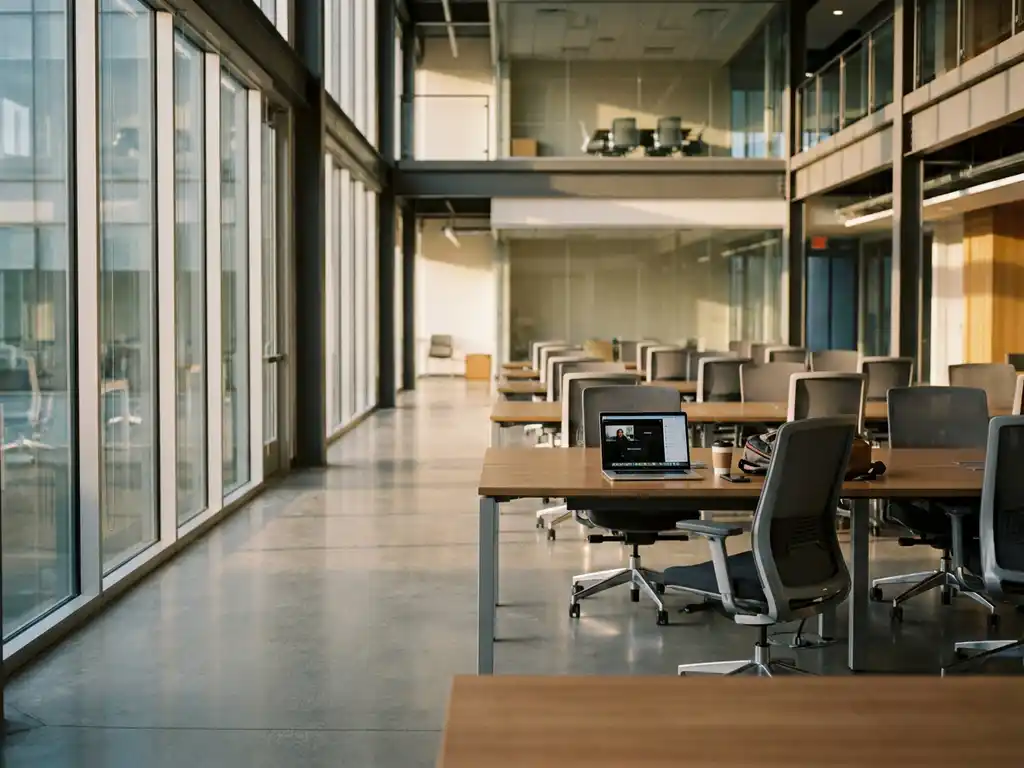
The widespread adoption of remote work has fundamentally transformed the commercial real estate landscape. What began as an emergency response to global health concerns has evolved into a permanent shift in how businesses approach office space needs. Companies across all sectors are now grappling with questions about the optimal amount and type of office space required in this new era of flexible work arrangements.
Understanding these changes is crucial for businesses making strategic decisions about their office space requirements. The traditional model of fixed, full-capacity offices has given way to more nuanced approaches that balance employee flexibility with operational needs and company culture.
What is the current state of office space demand after remote work adoption?
Office space demand has stabilized at approximately 15-20% below pre-pandemic levels, with significant variations across markets and property types. The initial dramatic decline in demand has given way to a more selective approach, where companies prioritize quality over quantity in their office space decisions.
The current market shows distinct patterns emerging across different segments. Premium office buildings with modern amenities, excellent connectivity, and sustainable features continue to attract strong demand. Companies are willing to pay higher rents per square foot for spaces that offer superior employee experiences, even as they reduce their overall footprint.
Vacancy rates in major business districts remain elevated compared to 2019 levels, but this varies significantly by location and building quality. Class A buildings in well-connected areas are seeing faster recovery than older properties in less accessible locations. The flight to quality has become a defining characteristic of post-pandemic office leasing.
Geographic shifts have also emerged, with some companies relocating from expensive urban cores to suburban locations that offer better value and easier access for employees who may only commute a few days per week. This has created pockets of increased demand in previously overlooked markets while putting pressure on traditional central business districts.
How has hybrid work changed office space requirements?
Hybrid work has shifted office space requirements from individual workstations to collaborative and flexible spaces that maximize interaction during in-person days. Companies now design offices as destinations for teamwork, creativity, and culture-building rather than daily task completion.
The traditional desk-per-employee model has largely disappeared. Instead, organizations are implementing hoteling systems, shared workspaces, and activity-based working environments. This approach typically reduces space requirements by 20-30% while improving space utilization rates.
Meeting rooms and collaborative areas have become the most valuable real estate within offices. Companies are investing more heavily in conference facilities, brainstorming spaces, and informal gathering areas. Technology infrastructure has also become critical, with enhanced video conferencing capabilities and seamless connectivity requirements driving renovation and leasing decisions.
Flexibility has become paramount in lease negotiations. Companies seek shorter-term commitments, expansion and contraction options, and the ability to modify space configurations as their hybrid work policies evolve. This has led to increased interest in flexible office solutions and co-working arrangements as supplements to traditional leases.
What’s the difference between pre-pandemic and post-pandemic office leasing trends?
Post-pandemic office leasing emphasizes flexibility, wellness features, and shorter lease terms, contrasting sharply with the pre-2020 focus on long-term commitments and maximum square footage. The average lease term has decreased from 7-10 years to 3-5 years across most markets.
Before the pandemic, companies typically planned office space based on headcount projections and growth assumptions, often securing more space than immediately needed. The leasing process was primarily driven by location, cost per square foot, and basic infrastructure requirements.
Today’s leasing decisions prioritize employee wellness and experience. Air quality systems, natural light, outdoor access, and health-focused amenities have moved from nice-to-have features to essential requirements. Companies are willing to pay premiums for buildings that demonstrate clear health and safety advantages.
Negotiation dynamics have also shifted significantly. Tenants now have greater leverage in many markets, leading to more favorable lease terms, including tenant improvement allowances, rent-free periods, and flexible space modification rights. Landlords are increasingly offering services and amenities that were previously tenant responsibilities.
The due diligence process has expanded to include detailed assessments of building technology infrastructure, ventilation systems, and the landlord’s ability to adapt to changing tenant needs. Location criteria now factor in employee commuting patterns from distributed residential areas rather than assuming daily office attendance.
Which industries are still driving office space demand?
Technology companies, financial services, and healthcare organizations continue to drive office space demand, though with modified requirements focused on collaboration and innovation spaces rather than individual workstations. These sectors recognize the strategic value of in-person interaction for their business models.
The technology sector, despite pioneering remote work adoption, has maintained significant office space commitments. These companies view offices as essential for product development, client meetings, and maintaining company culture. However, their space utilization has shifted toward open collaboration areas, maker spaces, and flexible meeting environments.
Financial services firms face regulatory requirements that often necessitate physical presence for certain activities. Additionally, the collaborative nature of deal-making, client relationship management, and risk assessment drives continued demand for sophisticated office environments with advanced security and communication capabilities.
Healthcare and life sciences companies require specialized facilities for research, development, and regulatory compliance. These organizations often need hybrid spaces that combine traditional office functions with laboratory and testing capabilities.
Professional services firms, including law, consulting, and accounting practices, maintain office space for client meetings and collaborative work, though often in smaller footprints with more flexible configurations. The need to project professional credibility and provide confidential meeting spaces drives their continued office space requirements.
How should companies approach office space decisions in a remote work era?
Companies should adopt a data-driven approach to office space decisions, analyzing actual space utilization patterns, employee preferences, and business requirements rather than relying on pre-pandemic assumptions. Regular assessment and flexibility should guide all office space strategies.
Start by conducting thorough space utilization studies to understand how employees actually use office space when they are present. This data should inform decisions about the optimal mix of individual workspaces, meeting rooms, and collaborative areas. Many companies discover they need significantly less individual desk space but more high-quality meeting and project facilities.
Employee surveys and feedback sessions provide crucial insights into workspace preferences and productivity requirements. Understanding which activities employees prefer to do in-office versus remotely helps optimize space design and allocation. This input should directly influence lease negotiations and space planning decisions.
Consider implementing pilot programs or flexible arrangements before making long-term commitments. Short-term leases, co-working memberships, or flexible office solutions allow companies to test different approaches and gather real-world data about their space needs.
Financial modeling should account for the total cost of office space, including utilities, maintenance, technology infrastructure, and employee commuting support. Sometimes a smaller, higher-quality space in a better location provides better value than a larger, less expensive option.
Future-proofing strategies should include lease terms that allow for expansion or contraction based on business needs, technology infrastructure that supports hybrid work models, and space designs that can be easily reconfigured as work patterns continue to evolve.
How First Real Estate helps with office space decisions
We understand that navigating office space decisions in the remote work era requires specialized expertise and market insight. Our team provides comprehensive support to help companies make informed decisions about their office space requirements in today’s complex market environment.
Our approach includes:
- Detailed market analysis to identify opportunities that align with your hybrid work strategy
- Space utilization assessments to optimize your office footprint and reduce unnecessary costs
- Lease negotiation expertise to secure flexible terms that adapt to changing business needs
- Strategic planning support to future-proof your office space decisions
- Access to off-market opportunities that may not be available through traditional channels
Whether you’re downsizing, relocating, or optimizing your current space, we provide the market knowledge and negotiation expertise needed to make strategic office space decisions. Our focus on sustainable, high-quality properties ensures your office space investment supports both your immediate needs and long-term business objectives.
Ready to explore your office space options in the new work environment? Contact us to discuss your specific requirements and discover how our specialized services can help you navigate today’s office space market effectively.
Benieuwd wat FIRST Real Estate voor uw vastgoed kan betekenen?
Onze specialisten denken graag met u mee over uw vastgoedvraagstuk en de mogelijkheden die daarbij passen.